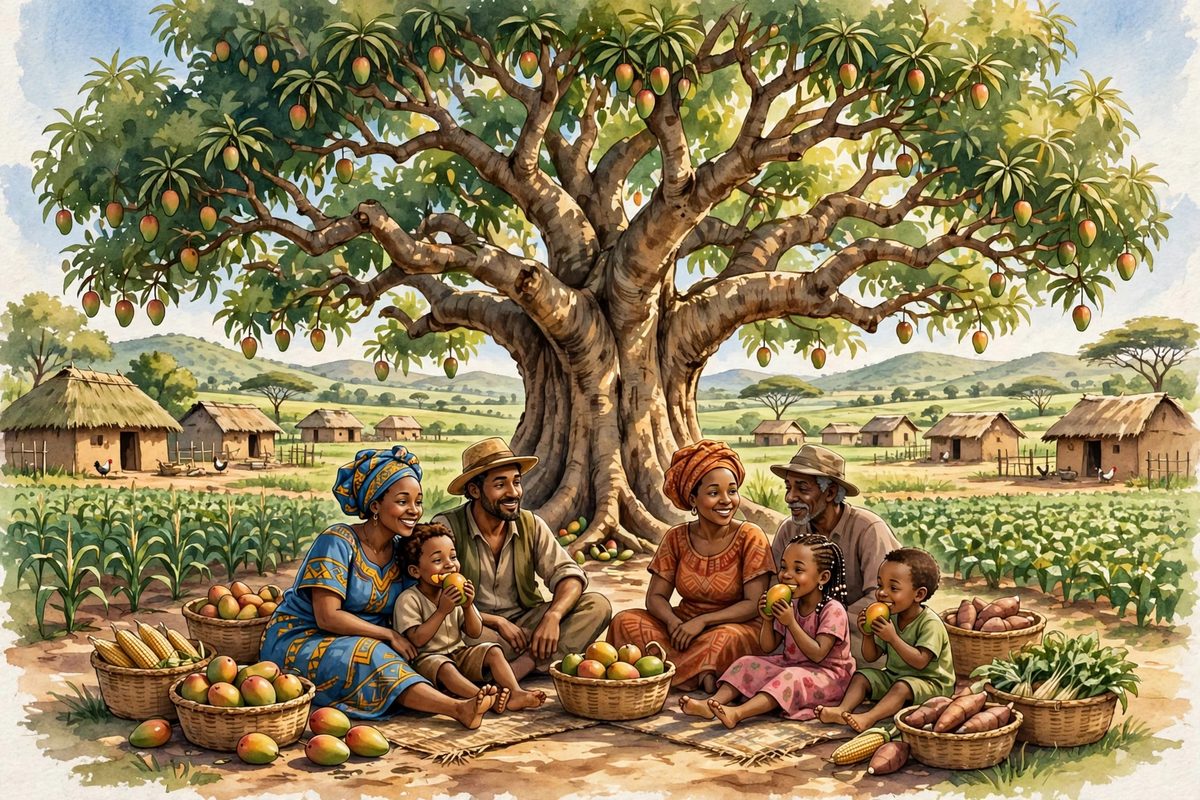
Among the Luo, a name is never random. It records the hour you arrived, the weather that morning, the season in the fields — so that any stranger, hearing your name, already knows the day you were born.
When a child was born, the grandmother would ask about everything around the birth — the season, the weather, the time of day and the very hour — and from those circumstances the name was chosen. Look at the pairs and you will see the pattern at a glance: a boy's name begins with O-, a girl's with A- — Otieno and Atieno, brother and sister of the same night. Today a child often carries a Christian name first, and then the Luo name that tells the story — the old clock still ticking inside the new name.
Read a Luo name and you can tell the time:
Twins receive their paired names in order: Opiyo / Apiyo, the first-born of the two, and Odongo / Adongo, the second — and the child who follows twins is Okelo / Akelo, the one who was "brought" after them. And names reach backward as well as forward: children are also named for ancestors, so the line of the family stays unbroken — tradition holds that an ancestor might even appear in a family member's dream, asking to be carried again. To hear a name called across the dala is to hear the family's whole history answering at once.
What does YOUR name say? If you carry a Luo name, you carry a small story of the day you came. Ask your grandmother — she remembers the weather.