Dho Luo — the language of the lake shore. Learn to greet us in it, and sit a while with the ngeche, the proverbs in which our elders keep a whole people's wisdom.
Dholuo is the language of the Luo people of western Kenya and northern Tanzania, spoken all around the eastern shores of the lake we call Nam Lolwe — Lake Victoria. It belongs to the Western Nilotic family, kin to Acholi, Alur and Lango across the border in Uganda. It is a tonal language — the same word can change its meaning with its music — and it is learned the old way first: at home, in the homestead, in stories and songs and proverbs around the fire.
A written tradition came later: the first Dholuo grammar was published in 1910, and the scholar Asenath Bole Odaga of Kisumu gave the language its great dictionaries and its beloved collections of proverbs and sayings. Today Dholuo is spoken by more than four million people, heard on Ramogi TV and KBC, sung in church — the Bible itself circulates in Dholuo — and spoken every day in the homes, markets and beaches of Homa Bay.
Try these at the gate of any dala in Homa Bay, and watch the faces light up:
And the everyday words of the shore: ber — good · rech — fish · nam — lake · pi — water · kuon — ugali · chiemo — food · dhiang' — cattle · nyathi — child · dichuo — man · dhako — woman · kwaro — grandfather · dayo — grandmother · wer — song · mach — fire · koth — rain · chieng' — sun.
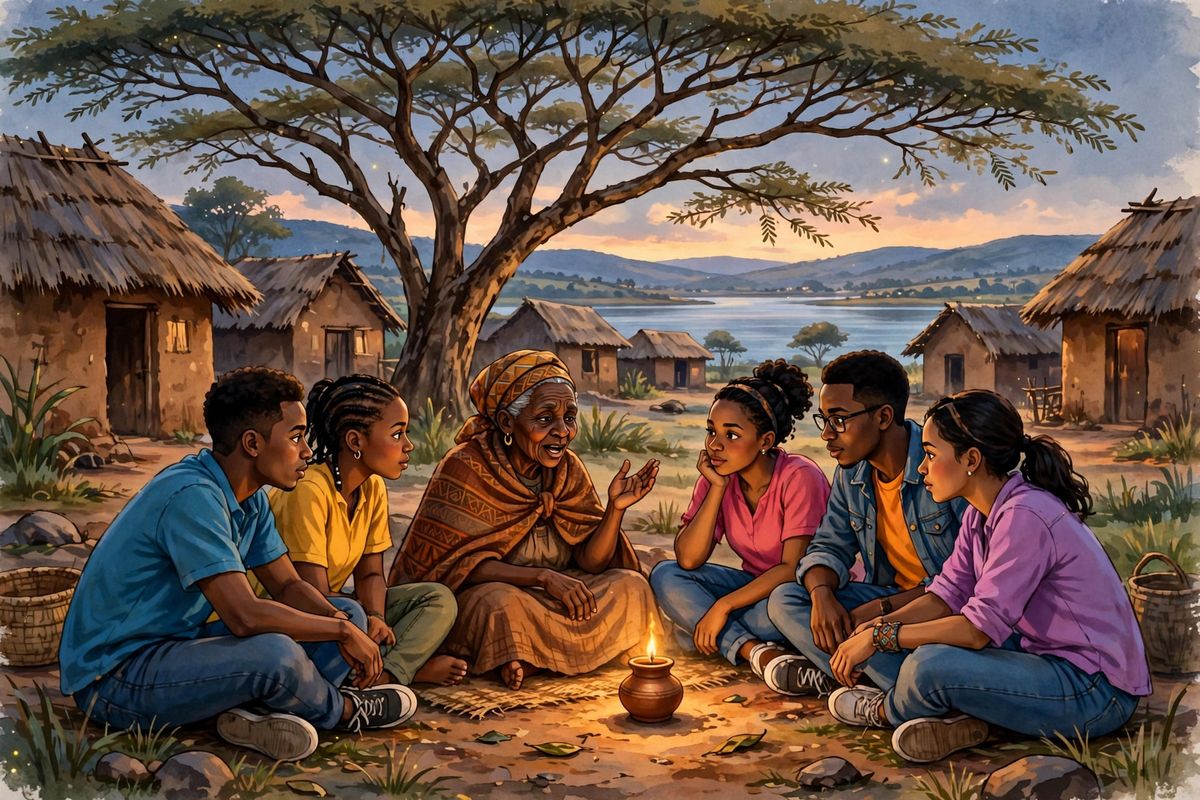
Luo proverbs, sayings and riddles are known together as ngeche (one is a ngero). A ngero is more than a proverb: it is a small, complete piece of social wisdom whose full meaning unfolds from the moment it is spoken into. The elders are its chief carriers — a well-placed ngero from an elder can settle an argument the way a judge's ruling does, teaching and correcting without ever raising a voice. Children meet the ngeche first as riddles and fireside fun, and absorb the moral code of the people inside the laughter.
The elders are gathering 1,000 Luo proverbs before they are lost — every ngero carried to us is written into the Register, checked, and credited to its carrier. If your grandfather holds one we have not written down, bring it home: WhatsApp text or voice note to +254 701 917972.