The Dala — The Traditional Homestead
The round, fenced home where a family’s whole order — who sleeps where, who teaches whom, who eats — was written into the ground itself.
One fence, many houses — and every position meant something.
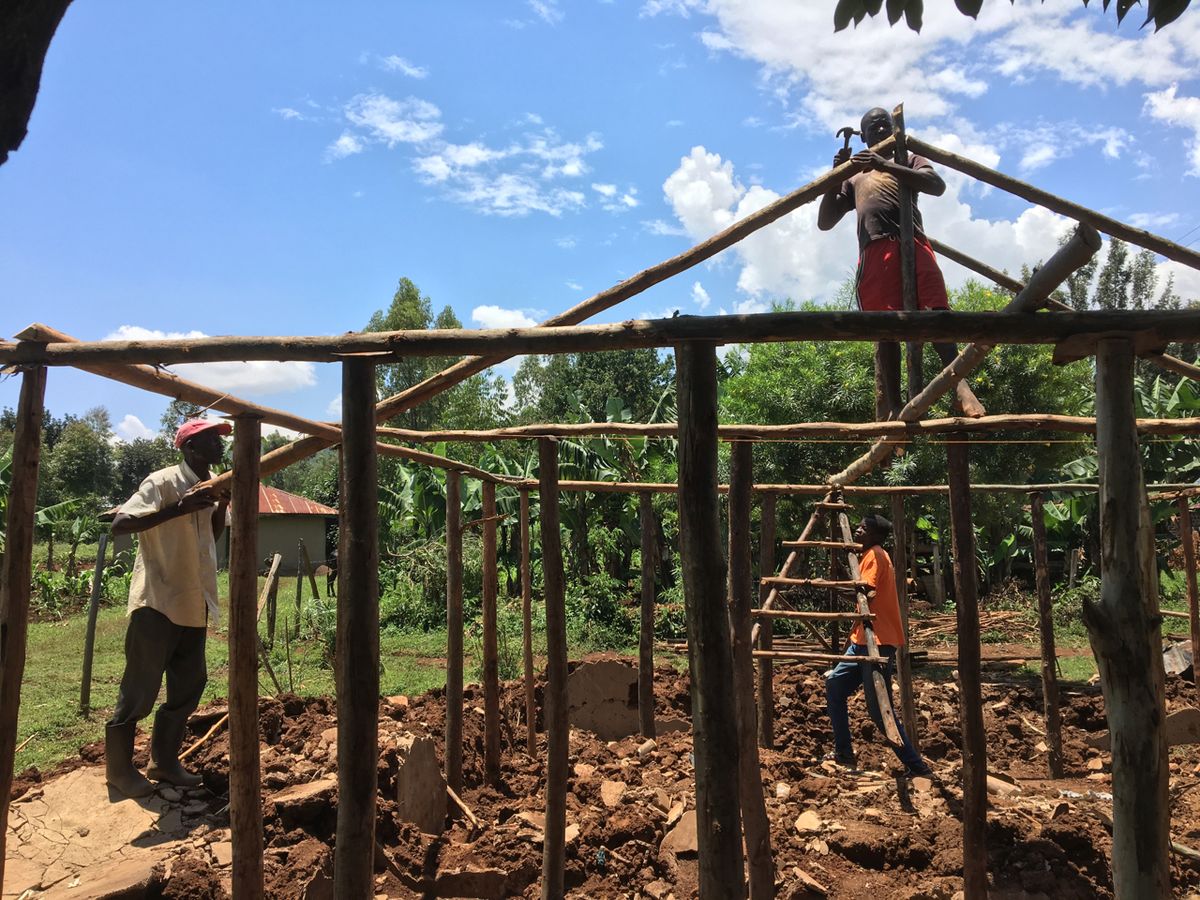
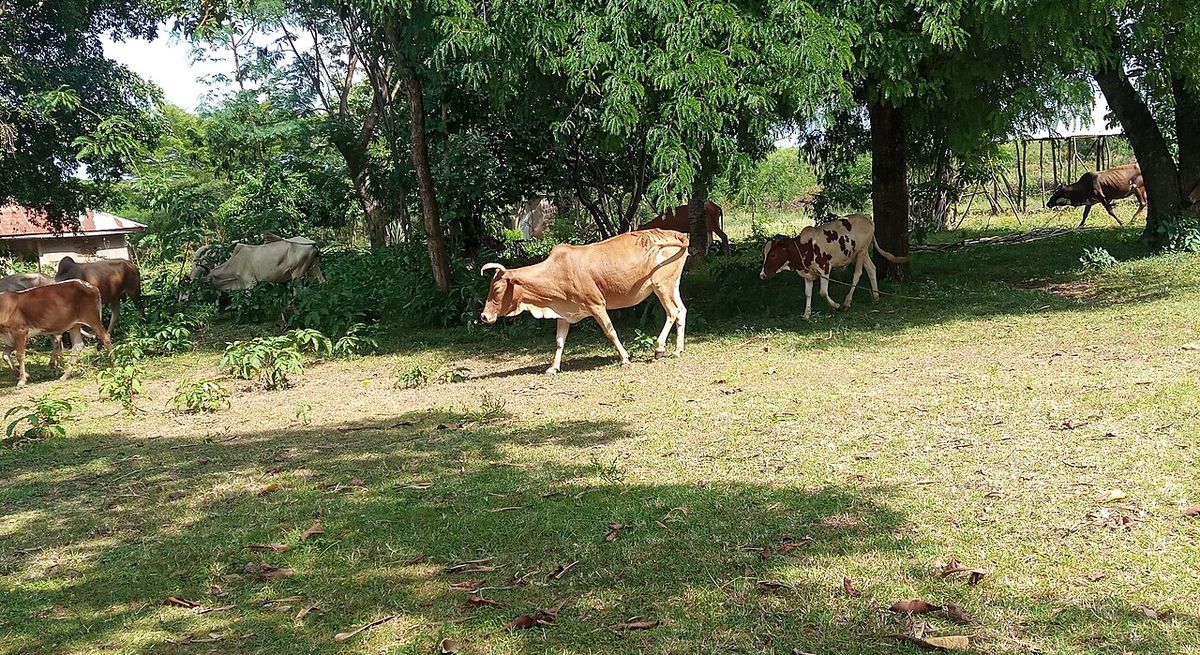
The old Luo settlement unit was the dala: a round homestead fenced with thickly grown euphorbia (ojuok) and thorn brush to keep away enemies, intruders and wild animals. The Pitt Rivers Museum’s Luo Visual History, built largely on E. E. Evans-Pritchard’s 1936 photographs, describes it plainly:
“The homestead had a main entrance (rangach) and other smaller private or secret entrances (rot). Inside the homestead was a well-defined layout of huts (udi) and granaries (dero) surrounding the central cattle pen (kul).”
Before homesteads spread out like this, Luo settlements in a more warlike age were defended together — by earthworks (gunda bur) or by stone walls (ohinga, the type preserved at Thimlich Ohinga). As security improved, the individual dala spread through the villages (gweng’). Inside, the most-used space of a hut was its veranda (agola), the thatched roof extended on pillars, where flour was ground on the stone (pong’), cooking was done, and poultry and young animals were kept.
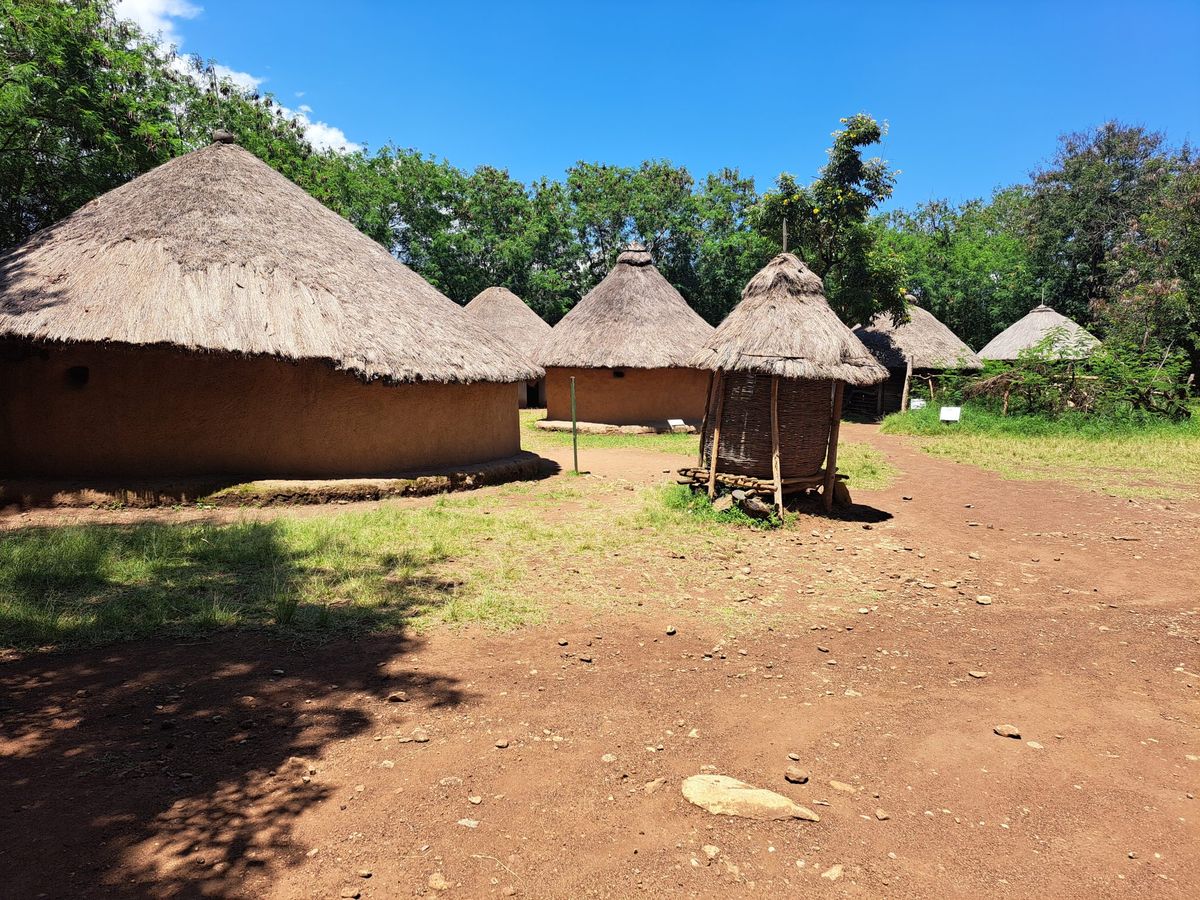
Position was the social map. The first wife — the mikayi — had the main hut, built directly facing the main gate. The second wife’s hut stood to the right of hers, the third to the left, the fourth to the right of the second, alternating by seniority. Sons built by the gate in birth order: the first son to the right of the gate, the second to the left, and so on. A visitor could read the family — its head, its first wife, its eldest son — from position alone.
Position was the social map — a visitor could read the family, its head, its first wife, its eldest son, from position alone.
The plan of the dala — tap a numbered marker, or a name in the list, to light each place up.
- 1. Rangach — the main entrance of the dala.
- 2. Rot — the smaller private, secret entrances in the fence.
- 3. Kul — the central cattle pen, around which the huts and granaries stood.
- 4. Mikayi — the first wife’s hut, the main hut, built directly facing the main gate.
- 5. Nyachira — the second wife’s hut, to the right of the mikayi’s.
- 6. Reru — the third wife’s hut, to the left; further wives alternated by seniority.
- 7. Simba — the unmarried young men’s huts by the gate: the first son to the right of the gate, the second to the left, in birth order — placed at the entrance, because energetic young men could meet an invader first.
- 8. Siwindhe — the grandmother’s house, usually near the gate, where the girls slept and were taught.
- 9. Duol / abila — the grandfather’s hut and its ever-lit hearth, where the men gathered in the evening.
- 10. Dero — each wife’s own raised, woven, thatch-roofed granary beside her hut, for sorghum, millet and maize.
- 11. Ojuok — the fence itself: thickly grown euphorbia and thorn brush, keeping out enemies, intruders and wild animals.
A schematic plan, drawn from the accounts in this chapter — positions as the sources describe them, not to scale.
Each wife had her own granary (dero) beside her hut — a raised, woven, thatch-roofed store for sorghum, millet and maize — and her own cooking and garden. The head of the home, the wuon dala, addressed as jaduong’ (“big person”, elder, grandfather), allocated land, settled disputes and controlled the cattle, and could redistribute food across the home.
An honest note on the “common granary”: you will sometimes hear of one village granary shared by all. Our researchers found no museum or academic source describing a single common granary. What the record documents is the per-wife dero, inside a homestead whose head could share food out. If Nyangweso’s elders remember a communal store of another kind, we want to record its name and its rules from their own mouths — see Chapter 11.
The teaching houses. Three buildings inside the dala did the educating, and a 2023 study from Jaramogi Oginga Odinga University, on Homa Bay County itself, describes them: the siwindhe, the duol and the simba “provided fora from which the youth learnt lessons about growing up.”
- Siwindhe — the house of a grandmother or elderly widow, a woman past childbearing (pim / dani), usually near the gate. Here is a correction worth making carefully: the siwindhe was not the young men’s house, as it is sometimes retold. It was the grandmother’s house, where the girls slept, and where she taught behavior, marriage and the tales (sigendini). Odaga’s proverb collection preserves the rebuke for anyone who missed that schooling: “Iming’ ka mane ok oninde siwindhe” — “You are as ignorant as a person who never slept in siwindhe.”
- Duol / abila — the grandfather’s hut and its ever-lit hearth. Boys and men gathered there in the evening; the head entertained visitors, instructed his sons in running the homestead, and settled the home’s disputes there.
- Simba — the unmarried young men’s hut, built at the entrance of the homestead, because energetic young men could meet an invader first. Building a simba still marks a boy’s road toward manhood.
Founding a new home — goyo dala. A married man with a son eventually left his father’s dala to found his own, in strict seniority. In the accounts collected of the rite, the father pointed out the site — kept secret, to frustrate witchcraft — a cockerel was left overnight under a basket on the spot and had to be found alive in the morning, and then the son processed out of his father’s gate: the man in front with axe and machete, the son carrying a chicken, the wife last carrying food. The chicken was expressly so the new home could entertain visitors with a meal. Hospitality was not added to the old home later. It was built into its founding.
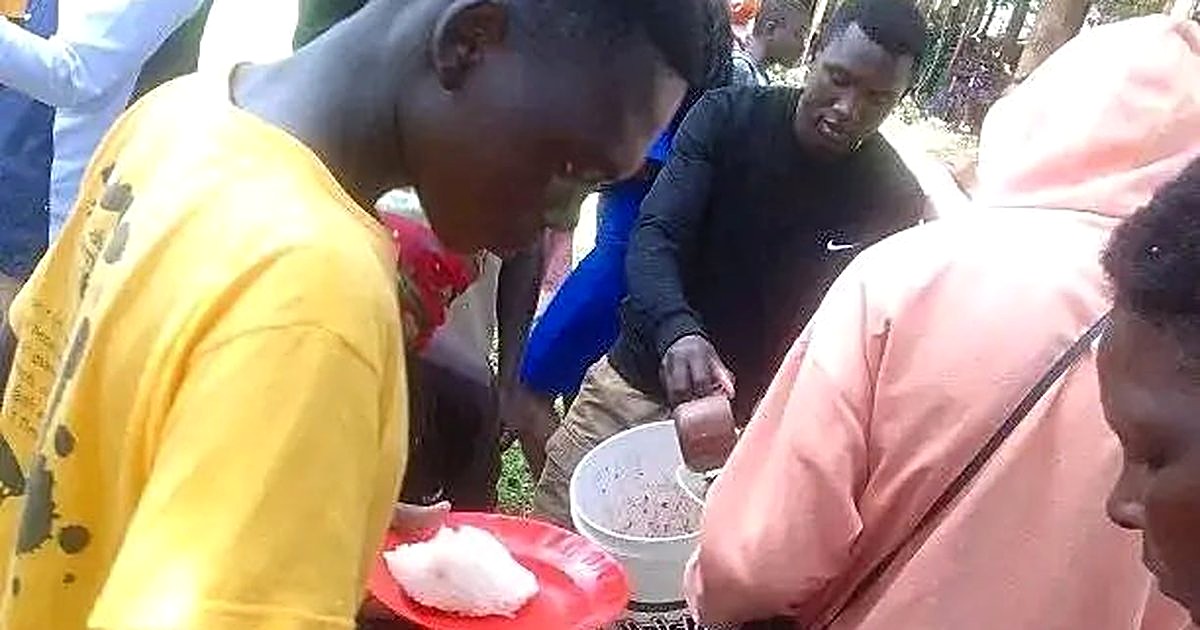
And hospitality was a moral law inside the walls, not a courtesy. A caller at mealtime was fed from everyone’s portion — Odaga’s collection (no. 277) says a person who calls during a meal “takes away the top of the kuon.” A visitor was entertained with chicken. To eat was a social act. The tale of what happened to a village that refused a stranger is told in Chapter 7.
Sources: Pitt Rivers Museum, Luo Visual History — Settlements and Home Structures (Evans-Pritchard photographs, 1936); Macleki, Traditional Homesteads Among the Luo of Kenya; Socio-Cultural Dynamics Associated with Early Marriages in Homa Bay County, IJSSIT, Jaramogi Oginga Odinga University, 2023; Odaga, Luo Proverbs and Sayings.